
TLDR: No, when a Hindu is persecuted in the world, the mainstream in the media yawns. The co-existence that Hinduism showcases is not being shown to the world.
Ancient Southeast Asia looked to India as a source for good governance and urbanization. Today, Indians are one of the main ethnic groups identified in the country, and Tamil is one of the official languages. Nevertheless, and this may be an unpopular opinion, Hinduism is not as mainstream in Singapore as Hindus may believe. The average Singaporean will find it difficult to distinguish between the cultural practices of Malays and Indians, or Muslims and Hindus. Apart from the occasional media release on Temple Kumbhabhishegams, most Singaporeans will never encounter Hinduism in a religious setting. Even in an opportunity to do so, the rising intolerance in our society from Abrahamic faiths prevents it. We are not portrayed in the media nor are some basic ideas of Hinduism taught in schools (and what is taught in Social Studies or History textbooks might still be rooted in the outdated and disproven Aryan Invasion Theory and Caste system). Even in our local newspaper, slander on Hinduism gets passed off as an editorial, something that would not pass for the other major religions.
Hindus do not have a space to have our philosophies discussed or showcased even in Indian-language media such as Tamil Murasu, so how can other Singaporeans learn about it? In fact, local media outlets have exhibited bias against Hinduism. For example, the Straits Times carried a wire news article about the new Ram temple in Ayodhya, stating that it had been built after tearing down the Babri mosque. According to this article, Hindus merely claim that several mosques were built after destroying the original temples. However, there is plenty of evidence from renowned Islamic scholars about the destruction of several temples in India. By not stating this, our local newspaper appears to doubt or discredit Hindu voices or grievances. This becomes spectacularly clear when we analyze how the Straits Times covers (or more accurately, fails to cover) the loss of Hindu lives. Three examples follow.
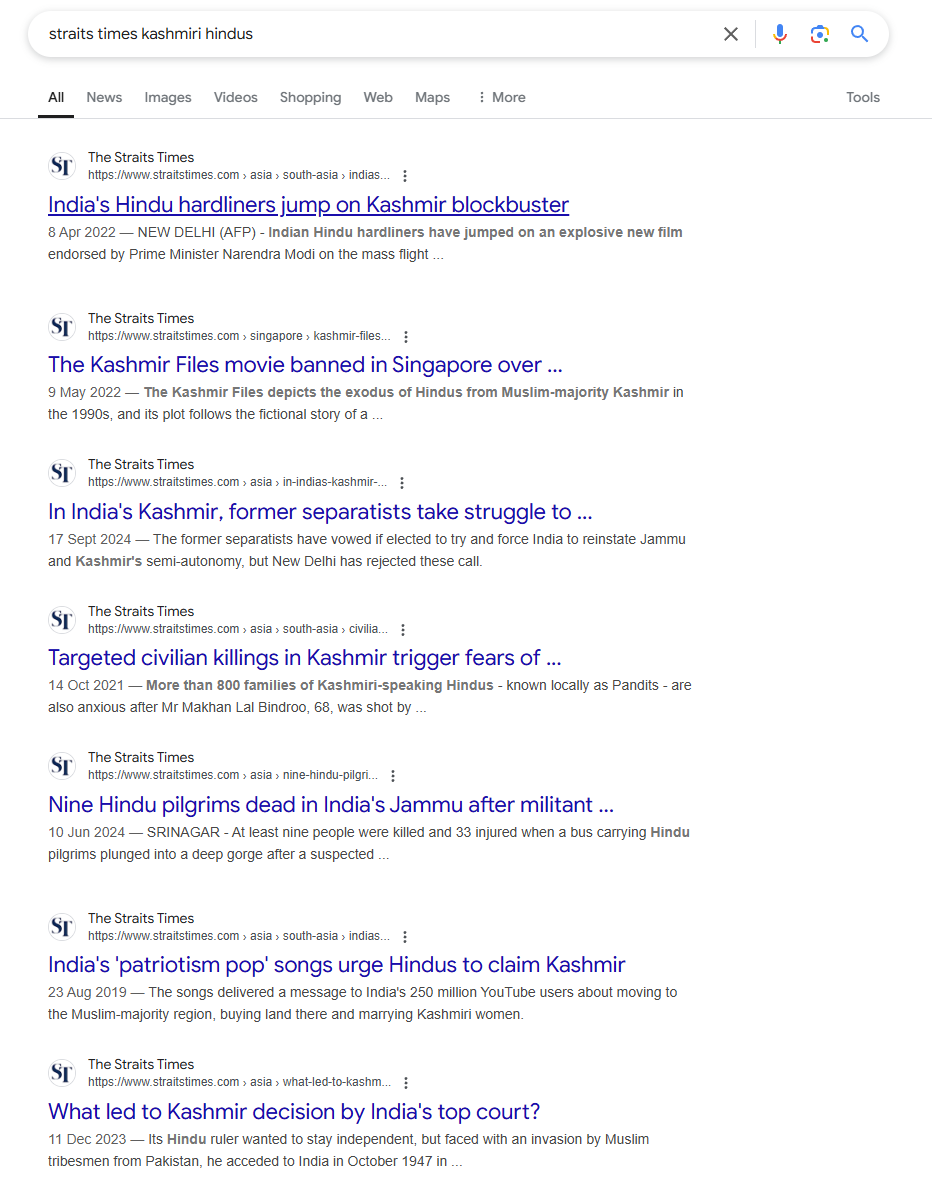
First, if we were concerned about the genocide or ethnic cleansing of Kashmiri Pandits and wanted to know more, the Straits Times would not be of much use. Instead, the paper has focused on tangential topics from that ongoing event. Terror attacks on Hindu pilgrims are a mere footnote and the paper has not analyzed or related it to the security concerns the Indian government or Hindus may have for that region.
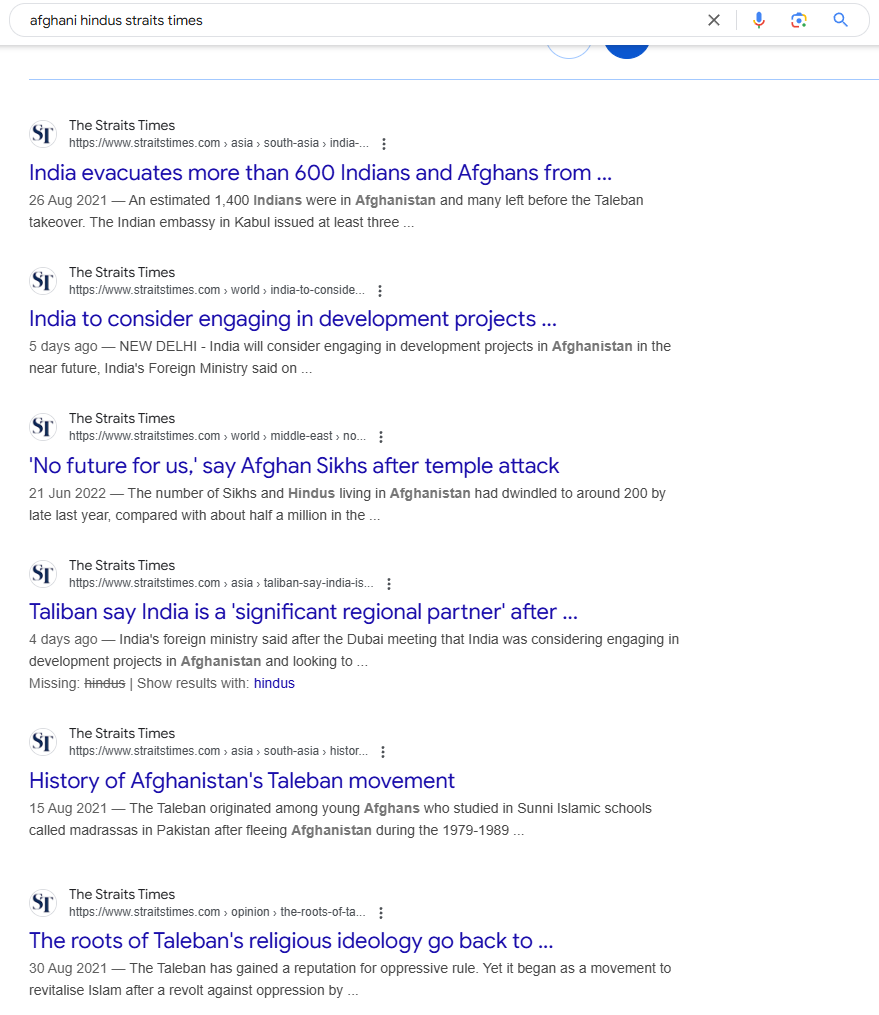
Second, the complete genocide of Afghani Sikhs and Hindus has happened in our lifetime, but the Straits Times did not present any extra editorial on this topic. It appears as if the complete eradication of two major Singaporean religions in an Asian country does not warrant further analysis or comment.
Third, while there is more coverage of the dire situation Hindus are facing in Bangladesh, it is still not positioned in a sympathetic manner towards Hindus who are being persecuted merely for practicing their beliefs. There is no mention of historical genocides like Operation Searchlight (1971) where a million Hindus were killed within nine months.
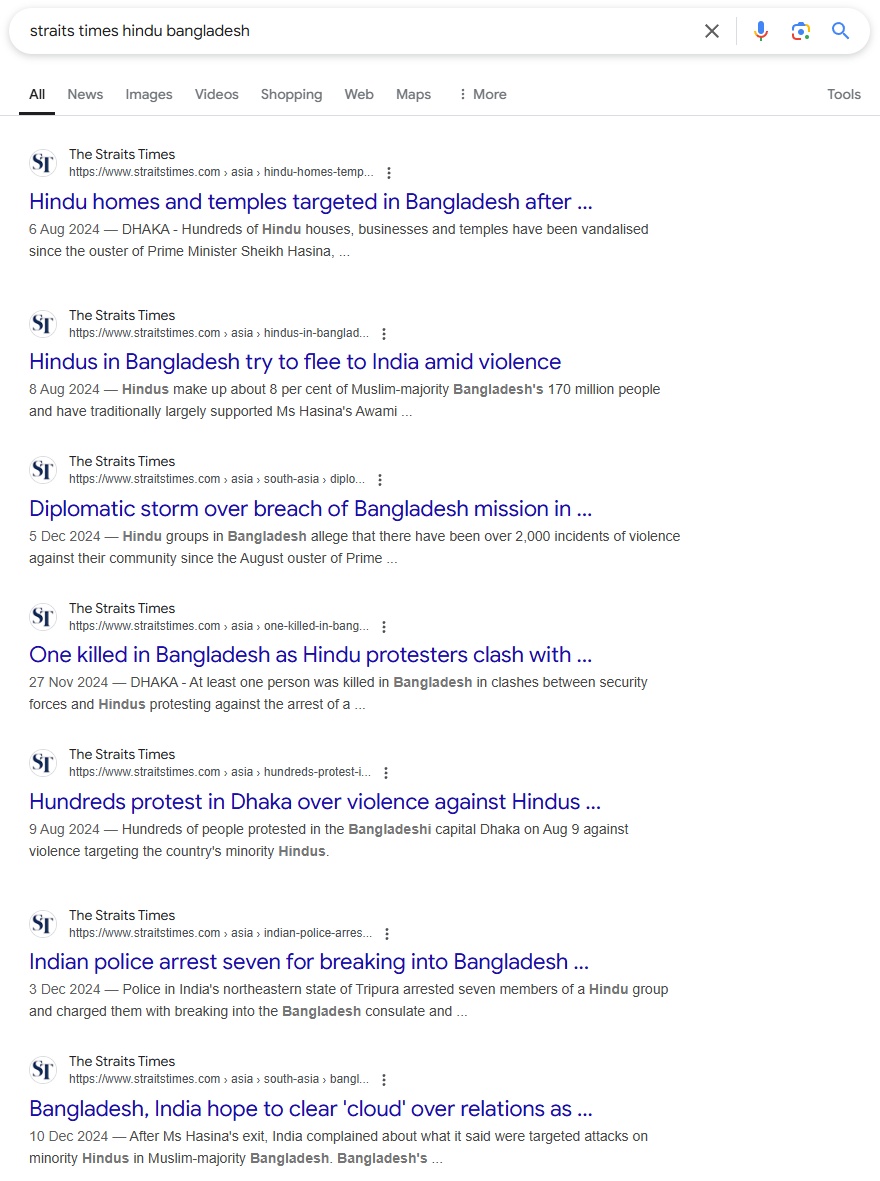
Beyond the lack of coverage for ongoing violence against Hindus, the Straits Times has also exhibited a lack of basic understanding of Hinduism. This was particularly stark when the paper published a Hinduphobic article insinuating that Hinduism encourages nuclear armageddon. Despite the outcry, the views of the average Hindu were not printed and no apology was issued. These examples lead one to question whether the Straits Times continues to have any relevance in a globalized media environment.
This mimics a global trend pointed out by Professor Vamsee Juluri, where the Hindu voice is denied legitimacy.
Singaporean Hindus want this to change. We yearn to be understood and accepted. We noticed that whenever a post or topic validates Hindu beliefs and ideas, it tends to go viral. We saw this most obviously with our Hindus of SG series: when we posted a topic from a non-Indian’s point of view, it tended to go viral.
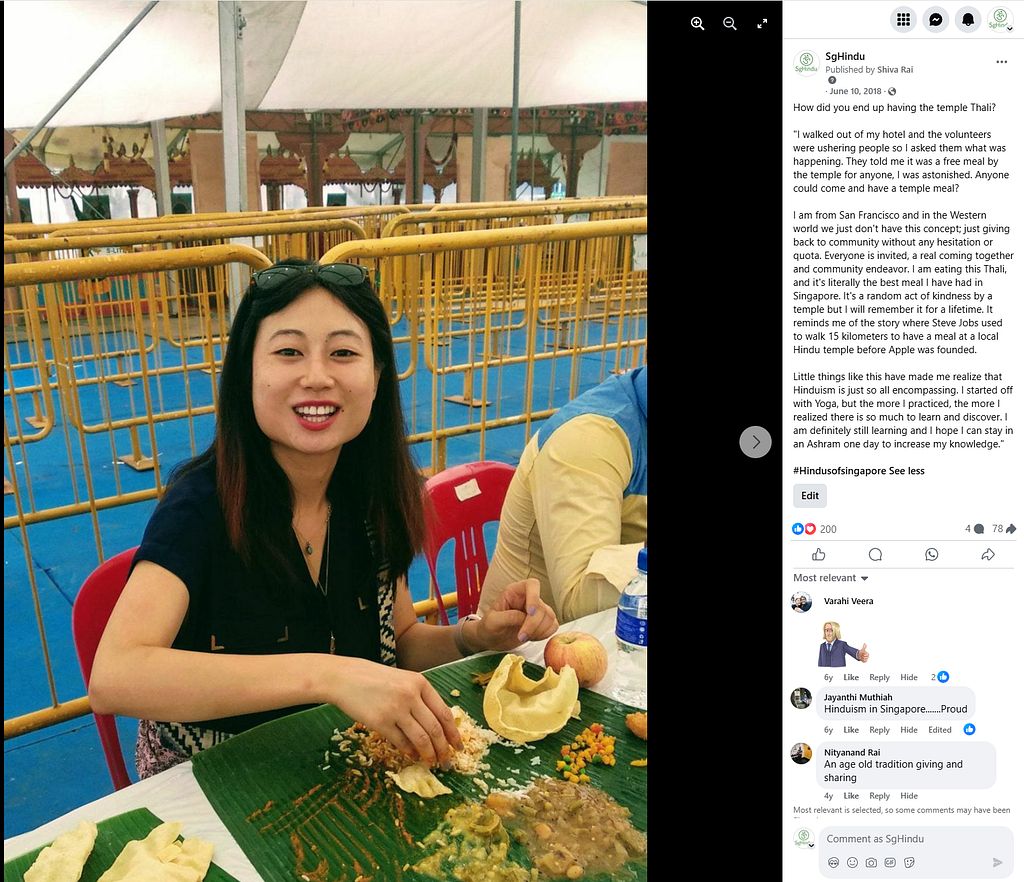
There is a lot of scope to engage outsiders with Hinduism. Even showing tourists around a temple can be a very rich and fulfilling experience for all parties, not to mention a lucrative one. The art and inclusiveness of Hinduism stands in stark contrast to the countries that many of these individuals come from.
We can do a lot more to highlight the experiences of the ~200 Malay and ~500 Chinese Singaporeans who follow Hinduism. This is a fact that should be celebrated. In a world where global powers cannot get along, we have showcased Chinese Hindus, some of whom even run temples from their homes. It is strange that in 2024, when the news was dominated by Abrahamic conflict in Gaza, Hinduism being worshiped cohesively with Chinese faiths and sharing sacred spaces is a reality that does not get celebrated enough. In land-scarce Singapore, this has been a policy goal for the Ministry of National Development that mainstream Abrahamic faiths have not been able to adapt to.
We must also consider how else to increase awareness of Hinduism. For example, how localized is our Hinduism to the context of Singapore? Do we have prayers for the rites of passage that are so distinct to Singaporeans (e.g., passing PSLE, enlisting in NS, getting a BTO)? Can we customize certain rituals to these aspects of Singaporean Hindu life? What about Hinduism in the wider context of ASEAN? Have we exchanged or imbibed traditions of the Balinese Hindus, whose practices predate Singaporean practices by millennia? Who is the ideal Singaporean Hindu? How can we highlight the acts of Singaporean Hindus that make our little community proud? Who should lead our community? Are these ideas decided by the government or behind closed doors?
These are pressing questions that we Hindus need to answer to break free from our echo chamber. It is the lack of engagement with the general public that prevents us from even being able to get a sea-burial jetty.
Dharma sustains the society
Dharma maintains the social order
Dharma ensures well being and progress of Humanity
Dharma is surely that which fulfils these objectives
Mahabharata — Karna Parva — Ch. 69 Verse 58
Read the next part here.